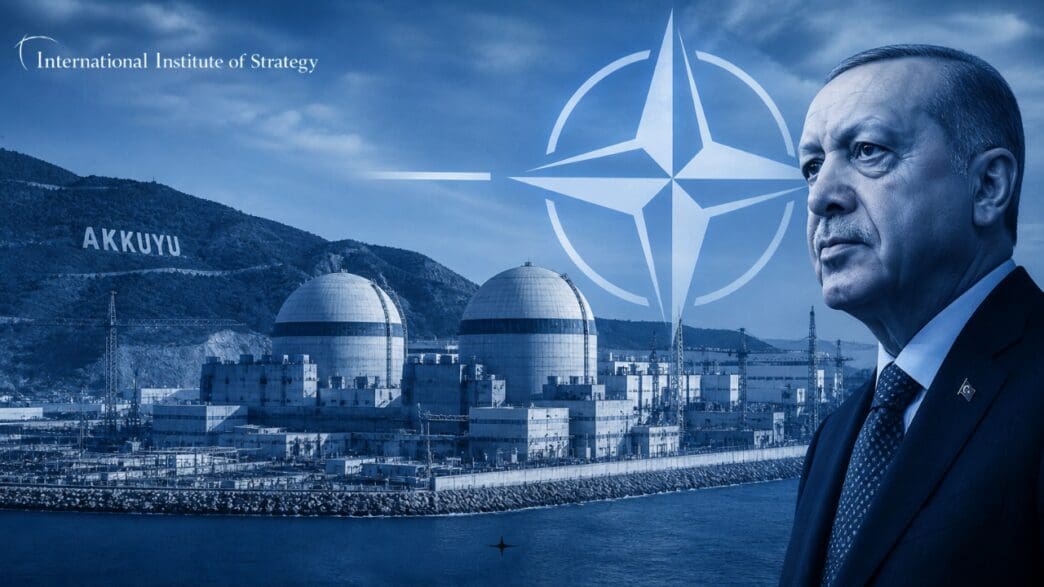
Before Akkuyu Becomes a Target, It Becomes a Liability
Turkey built a Russian nuclear enclave inside NATO. Article 5 will save it neither from neutralization nor from Article 3.
By Shay Gal
Key Judgments
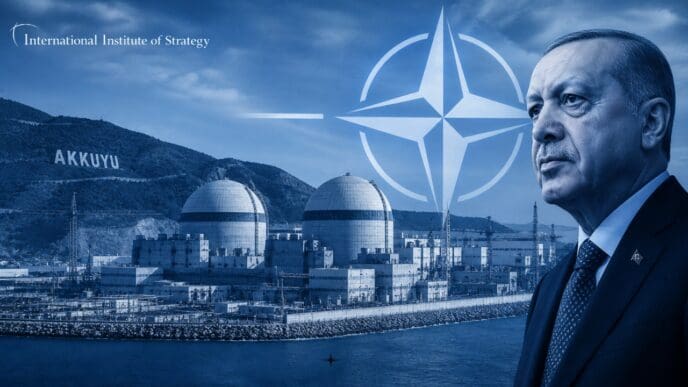
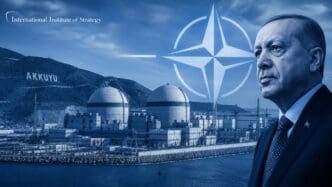
- Akkuyu is a Russian nuclear enclave inside NATO: Russian-owned, Russian-operated and Russian-controlled on Turkey’s Mediterranean coast.
- The plant embeds a hostile state operator in a member’s baseload electricity system and places it under Alliance cover, constituting a structural breach of NATO’s Article 3 resilience obligations.
- In crisis, Russia holds a practical veto over a NATO member’s electricity supply and nuclear safety without crossing thresholds or accepting attribution.
- Turkey’s leadership rejects permanent nuclear asymmetry, has floated domestic enrichment and pairs this doctrine with long-range missile development and aggressive regional signaling.
- For the EU, Akkuyu reverses the logic of reducing Russian energy leverage and re-imports Russian nuclear power into the European security space.
- For NATO and frontline states, Akkuyu is a dual-use, sanctions-sensitive node neutralized pre-kinetically through legal, regulatory, financial and cyber tools.
- Akkuyu stands as concrete and fails as a strategic asset. Turkey keeps a plant. Russia loses a lever.
- If Akkuyu ever shifts from protected civilian generation to operational enablement, Article 5 does not automatically shield Turkey. The first file NATO opens is Article 3: why a member embedded a Russian controlled vulnerability inside Alliance space and then expected solidarity to cover the consequences.
1. From “First Nuclear Plant” to Nuclear File
Akkuyu is presented as Turkey’s first nuclear power plant. It is only superficially true. At cabinet level, Akkuyu is the second nuclear file NATO failed to classify in time.
It is a 4.8 GW, four-reactor VVER-1200 complex built, financed, owned and operated under Rosatom’s build-own-operate model, with the Russian state corporation holding the controlling stake and core expertise.[1]
It is a permanent Russian nuclear presence on the territory of a NATO state. Fuel, servicing, training and critical control-system components are anchored in Russia. Turkish baseload electricity and nuclear learning are routed through a foreign command layer on the Mediterranean. [1]
Iran established the rule. A nuclear file begins when “civilian” becomes a shield for future military optionality. Before the June 2025 strikes, the IAEA reported that Iran had accumulated over 440 kilograms of uranium enriched up to 60 percent, while losing visibility over key elements of the program. [2] The lesson is structural, not Iranian. Akkuyu sits in that space. The legal label is civilian. The architecture preserves ambiguity and dependence.
2. Architecture of Dependence: A Foreign Veto Node
The decisive question is not what Turkey says about Akkuyu. It is who can turn it on, slow it down or turn it off.
Rosatom owns and operates the plant. Russian entities provide fuel, servicing, the training pipeline and key elements of the control systems. Turkish personnel are trained in Russia. Licensing and safety procedures are tied to Russian technical documentation and software.[3] [4]
Akkuyu is not strategically innocent. A Russian state actor holds negative control over a NATO member’s crisis electricity supply. Russia delays fuel, stretches maintenance cycles, slows approvals, manipulates software updates and induces uncertainty in safety systems. It degrades output without crossing thresholds or accepting attribution. None of these moves requires a missile. All complicate NATO planning and reduce Turkish resilience. [3] [4]
This is a single foreign veto node in a member’s grid, framed as progress and protected as civilian infrastructure.
3. Doctrine and Delivery: The Turkish Syllabus
Infrastructure becomes a nuclear file when it aligns with doctrine and delivery.
Erdogan rejects a world order in which some states possess nuclear-armed missiles while Turkey is denied the same capability. He asserts that nuclear capability is either forbidden to all or allowed to all. He permits domestic enrichment to enter the political vocabulary. [5] [6]
Turkey tests and advertises longer-range missiles and military reach, including threats referencing Athens [7] and statements about “entering” Israel as it did Libya and Nagorno-Karabakh.[8] Range becomes language, language becomes signaling, signaling becomes habit.
Akkuyu’s Russian-run architecture, Ankara’s doctrine and its missile culture form a single syllabus: equality, grievance, sovereign technology, future optionality. The file is open.
4. NATO’s Obligation and Turkey’s Breach
NATO’s problem begins before conflict. Article 3 requires Allies to maintain and develop the capacity to resist armed attack. Energy resilience and secure infrastructure are core to that obligation. [9]
Akkuyu embeds a hostile state operator in a member’s baseload and places that dependence under NATO cover. Turkey imports a Russian veto into its grid and requests that the Alliance treat the node as normal infrastructure. This is a functional Article 3 breach. [9]
Article 8 exposes the contradiction. Allies do not enter commitments that conflict with the Treaty. Akkuyu grants a Russian state operator long-term authority over a NATO member’s crisis electricity supply. The conflict surfaces when Moscow exploits its position and Ankara expects the outcome to be treated as an external shock. NATO does not underwrite self-imposed vulnerability. [10]
Article 4 consultations bring the file into daylight as a resilience failure and a test of whether the Alliance tolerates vulnerability by choice. [10]
Article 5 is a judgment, not an entitlement. Allies defend against external attack. They do not underwrite the consequences of deliberate structural dependence on a hostile supplier. [11]
5. Europe’s Energy Policy Turned Against It
Akkuyu re-imports Russian nuclear power into the European security space through a NATO gateway.
European policy reduces strategic dependence on Russian energy and closes loopholes that allow Moscow to convert exports into pressure. Akkuyu reverses that direction. It establishes a Russian-run nuclear hub on the Mediterranean. [12] [13]
Every fuel shipment, spare part, software update and insurance renewal crosses a sanctions and compliance threshold. Akkuyu is a sanctions-sensitive node by design.[12] [13]
European regulators and markets treat it accordingly. Akkuyu becomes a permanent compliance burden. Lenders and insurers price Russian sovereign risk on NATO soil. Turkish financial actors inherit that exposure. The plant becomes expensive before it becomes productive. [13]
6. Neutralizing Akkuyu Before the First Strike
Akkuyu is neutralized before any strike. It is denied the status of a normal, bankable, insurable and trusted piece of infrastructure.
Modern nuclear systems operate through law, finance, regulation and software. Licensing and insurance are conditioned on separation from Russian control, full transparency of control systems and independent cyber assurance. Financing is constrained through classification as a sanctions-exposed asset. Nuclear-security exercises expose every dependency. [14] [15] [16]
Each unanswered question delays connection. Each unresolved dependency raises cost. The plant stands, employs staff and connects cables, yet fails as a strategic asset if it cannot prove that a hostile supplier does not hold a practical veto over its operation.[14] [15]
7. The Turkish Paradox
Akkuyu creates a paradox Turkey does not resolve.
To claim Article 5 protection, Ankara presents the plant as ordinary infrastructure. To preserve nuclear optionality, it maintains ambiguity. To assert sovereignty, it ignores Russian control. To insist on civilian intent, it detaches the plant from nuclear rhetoric and missile signaling. [17] [18] [19]
Each move weakens another. The more Akkuyu is presented as independence, the clearer the foreign veto becomes. The more it is presented as normal, the more scrutiny reveals its abnormality.
Greece and Israel, with Cyprus and aligned European states, classify Akkuyu as a resilience failure, a sanctions vulnerability, a nuclear-security anomaly and a future military ambiguity problem. It becomes a burden Turkey carries alone. [20] [21]
8. Classification, Not Destruction
Iran proved the rule: nuclear danger begins when “civilian” protects ambiguity. Akkuyu is the Turkish version. It is a Russian-operated nuclear dependence inside a NATO state whose leadership rejects permanent nuclear asymmetry and speaks in the language of reach. [22] [23] [24]
The plant is not destroyed. It is named. Once treated as a Russian nuclear enclave inside NATO, an Article 3 breach, a sanctions-sensitive node and a future Article 5 complication, its value collapses. [25] [26] [27]
Sovereignty is measured in fuel contracts, software access, insurance signatures, grid codes and the ability to operate without asking Moscow. Akkuyu fails that test. That is the file. [28] [29] [30]
9. If Akkuyu Is Struck: Article 3 Opens Before Article 5
Akkuyu is protected only while it remains what Ankara says it is: civilian generation. That protection is real. It is not absolute. [31]
The threshold is not rhetoric. It is function. If Akkuyu becomes part of military enablement, command continuity, coercive infrastructure, Russian operational depth, protected logistics or a wider Turkish threat chain, the file changes. The label “civilian” no longer controls the analysis. Function does.[32] [33]
Ankara will invoke Article 5. It will not be enough.
Article 5 is not an automatic shield. It is a political judgment requiring allied confidence and consensus. No consensus forms around a Russian-controlled vulnerability that Turkey built, expanded and refused to correct. No alliance is obliged to defend self-inflicted exposure. No treaty converts Moscow’s leverage inside Turkey into NATO’s burden.[34] [35]
The first file to open is Article 3.[36]
Article 3 asks the real question: why did a NATO member place a hostile state operator inside its baseload system. Why did it give Russia fuel, servicing, software, training and continuity. Why did it turn critical infrastructure into strategic ambiguity. Why did it expect solidarity to protect the result.[37] [38]
If Akkuyu is ever struck, NATO will not begin with “who attacked Turkey”. It will begin with “what did Akkuyu become”.
If the answer is operational enablement, Article 5 does not rescue Ankara. Article 3 indicts it. [34] [36]
That is where consensus breaks. Allies defend Turkey from aggression. They do not defend Russian control inside Turkey. They do not protect nuclear ambiguity under civilian cover. They do not underwrite a vulnerability Turkey installed by choice.[34] [35] [36]
The sequence is fixed: classification, pressure, isolation, compliance failure. Only after those gates close does force enter the discussion. Even then, the issue is not punishment. It is removal of function, flow and integration.[32] [33]
Akkuyu’s danger is not that it may be bombed. Its danger is that Ankara is building the legal and strategic conditions under which others will argue that it no longer deserves the protection it assumes.
Before Akkuyu becomes a target, it becomes evidence.[31] [32] [36]
Shay Gal works with governments and senior security leaders on sovereign risk, alliance leverage, and cross-theatre security dynamics. He previously served as Vice President of External Relations at Israel Aerospace Industries (IAI) and as a senior advisor to Israeli government ministers.
Further Reading by the Author
“Turkey Is the New Iran”, Israel Hayom, July 8, 2025.
“For Turkey, Article 5 Is Dead”, eKathimerini, September 29, 2025.
“Τι είναι πραγματικά το Ακούγιου”, TA NEA, January 2, 2026.
“The Reactors NATO Cannot Defend”, eKathimerini, February 27, 2026.
“Iran Was the Rehearsal. The Turkish File Is Open”, Israel Hayom, April 14, 2026.
Endnotes
[1] World Nuclear News, “Final Assembly under Way for Akkuyu 4’s Reactor Vessel”, August 22, 2025,
[2] International Atomic Energy Agency, “NPT Safeguards Agreement with the Islamic Republic of Iran”, GOV/2025/65, November 12, 2025, 4–5.
[3] Ali Alkış, “Nuclear Security for Nuclear Newcomers: Exploring Türkiye’s Readiness”, Stimson Center, August 14, 2023.
[4] World Nuclear News, “Automated Control System for First Turkish Unit Delivered”, October 30, 2025.
[5] Reuters, “Erdogan Says It’s Unacceptable That Turkey Can’t Have Nuclear Weapons”, September 4, 2019.
[6] Sinan Ülgen, “Turkey and the Bomb”, Carnegie Endowment for International Peace, February 15, 2012.
[7] Associated Press, “Greek Foreign Minister Slams Turkish Leader’s Missile Threat”, December 12, 2022.
[8] Reuters, “Erdogan Says Turkey Might Enter Israel to Help Palestinians”, July 28, 2024.
[9] NATO, “Resilience, Civil Preparedness and Article 3”, November 13, 2024.
[10] NATO, “The North Atlantic Treaty”, April 4, 1949.
[11] NATO, “Collective Defence and Article 5”, November 12, 2025.
[12] European Commission, “REPowerEU: Phase-Out of Russian Energy Imports”, accessed April 28, 2026.
[13] Reuters, “Russia’s Rosatom in Talks with Turkish Firms on Akkuyu Nuclear Plant Stakes”, April 21, 2026.
[14] International Atomic Energy Agency, Licensing Process for Nuclear Installations, IAEA Safety Standards Series No. SSG-12 (Vienna: International Atomic Energy Agency, 2010.
[15] International Atomic Energy Agency, Computer Security Techniques for Nuclear Facilities, IAEA Nuclear Security Series No. 17-T (Rev. 1) (Vienna: International Atomic Energy Agency, 2021).
[16] OECD Nuclear Energy Agency, “Nuclear Liability”, accessed April 28, 2026.
[17] World Nuclear Association, “Nuclear Power in Turkey”, updated December 4, 2025.
[18] See note 5.
[19] See note 7.
[20] See note 9.
[21] International Atomic Energy Agency, Nuclear Security Recommendations on Physical Protection of Nuclear Material and Nuclear Facilities, IAEA Nuclear Security Series No. 13 (INFCIRC/225/Revision 5) (Vienna: International Atomic Energy Agency, 2011).
[22] See note 2.
[23] See note 17.
[24] See note 5.
[25] See note 9.
[26] See note 11.
[27] See note 12.
[28] See note 4.
[29] See note 15.
[30] See note 16.
[31] International Committee of the Red Cross, “Protocol Additional to the Geneva Conventions of 12 August 1949, Article 56: Protection of Works and Installations Containing Dangerous Forces”, June 8, 1977.
[32] International Committee of the Red Cross, “Protocol Additional to the Geneva Conventions of 12 August 1949, Article 52: General Protection of Civilian Objects”, June 8, 1977.
[33] See note 31.
[34] See note 11.
[35] NATO, “Consensus Decision-Making at NATO”, June 30, 2023.
[36] See note 9.
[37] See note 3.
[38] See note 4.