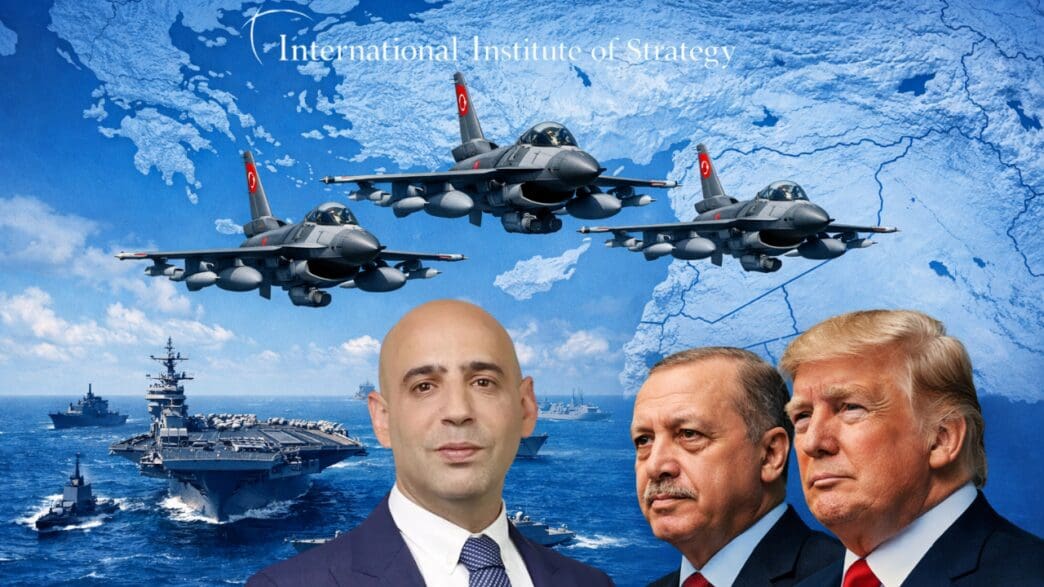
by Shay gal
American combat aircraft do not leave the jurisdiction of U.S. law when they cross a runway abroad. They leave under licence.
Every F-16 transferred through the U.S. export system carries legal conditions rooted in the Arms Export Control Act and embedded in the Letter of Offer and Acceptance that governs each sale. The aircraft may be used only for legitimate self-defence, internal security, or internationally recognised collective missions. They cannot be transferred, deployed, or employed outside those purposes without U.S. consent. They remain subject to monitoring and verification.¹
This is not diplomatic language. It is statutory law.
At minimum, compliance requires that actual use remain plausibly within those categories. Northern Cyprus strains any claim of internal security. Somalia lies outside any NATO-defined theatre. A campaign repeatedly associated with strikes on civilian infrastructure sits uneasily with any serious reading of legitimate self-defence.
Washington arms partners for clear reasons: to strengthen its own security perimeter, lock allies into interoperable systems, sustain its defence industry, and ensure strategic alignment through technological dependence. Arms sales are therefore not commercial exports. They are instruments of control.²
The system that enforces that control is not theoretical.
Foreign military transfers are monitored through Golden Sentry; commercial transfers through Blue Lantern. Inspections occur. Violations are recorded. Licences can be denied, suspended, or revoked. Supply chains can be cut. Congress can intervene directly.
In short: the aircraft remain American political leverage long after delivery.³
Turkey’s F-16 Architecture
Turkey’s air force sits at the centre of that system.
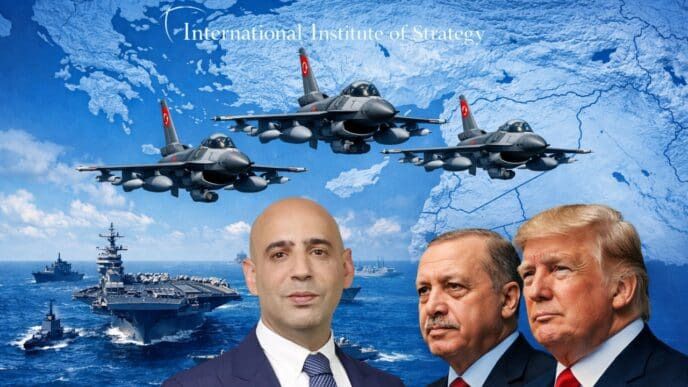
With more than two hundred operational F-16s, Ankara fields one of the largest fleets outside the United States. In 2024 Washington approved a modernisation package originally valued at roughly $23 billion: forty new Block 70 aircraft, advanced AESA radars, electronic warfare systems, mission computers, targeting pods and large stocks of precision weapons. The package was later reduced to roughly $7 billion but preserved the core element: forty new Viper-standard aircraft and associated munitions.⁴
The fleet profile matters. Turkey’s F-16 force is not a generic inventory but a layered structure built over decades around Block 30, 40 and 50 aircraft, with forty additional Block 70 jets now on order. Its earlier modernisation architecture was designed to pull different variants into a more unified avionics framework while keeping the older fleet operational for longer. Ankara’s later decision to abandon dozens of U.S. upgrade kits in favour of domestic work did not remove American leverage. It narrowed that leverage to the fields Turkey still cannot fully nationalise: radars, mission software, data links, weapons interfaces, sustainment and certification.
That is also why the basing structure matters. The Turkish F-16 force is distributed through an architecture that links modernisation, training and operational posture across multiple air bases facing in two directions at once: west across the Aegean and south-east toward Syria and Iraq. The aircraft may sit inside one alliance inventory, but their operational posture spans several theatres of pressure simultaneously.
An F-16 transfer is never simply an aircraft sale. It is an ecosystem of permissions.
Sensors, radar software, encrypted communications, mission systems, weapons integration, spare parts, and maintenance all remain tied to American approval chains. Aircraft without these links rapidly degrade into museum pieces.
Which means the real question surrounding Turkish F-16 operations is not operational capability.
It is licence compliance.
Operational Use: Three Theatres
Three theatres now force that question.
The first is northern Cyprus.
In March 2026 Turkey deployed six F-16 fighters to the occupied north of the island alongside air-defence systems. Ankara already maintains roughly forty thousand troops there. The deployment transforms a long-frozen occupation into a militarised airspace node.
This is precisely the geography that triggered the U.S. arms embargo against Turkey in 1975 after the Cyprus intervention.
When U.S.-origin combat aircraft appear inside the same disputed theatre half a century later, the legal question is unavoidable: under which licence authority was this deployment approved, and by whom?⁵
Silence from Washington does not erase the question.
For Greece and Cyprus the implications are immediate. Greek authorities have documented hundreds of infringements of sovereign airspace and aviation rules by Turkish military aircraft over the Aegean, including repeated F-16 incursions recorded in the Athens and Nicosia flight information regions and lodged at the United Nations. These are not isolated incidents but a sustained pattern in which U.S.-origin combat aircraft are used to pressure the air sovereignty of a fellow NATO ally and a European Union member state. The scale is the warning: Russian airspace violations of NATO states during the Ukraine war have been counted in single digits, while Turkish incursions against a single ally run into the hundreds.
The second theatre is Somalia.
Turkey operates its largest overseas military base in Mogadishu. In early 2026 fighter jets were deployed there as part of Ankara’s expanding military role in the Horn of Africa. Open-source defence reporting identifies the aircraft as F-16s.
Somalia is not NATO airspace. It is not alliance territory. It is not the theatre cited publicly when Washington justified the modernisation of Turkey’s F-16 fleet.
Expeditionary deployments of U.S.-origin fighters outside declared alliance missions require explicit consent. Whether that consent exists has not been clarified publicly.⁶
No public U.S. statement has explained why a modernisation package justified in the language of alliance defence now appears to underwrite expeditionary fighter deployment in the Horn of Africa. That gap is not semantic. It is the compliance issue.
The strategic signal of Mogadishu is wider than Somalia. The deployment followed the disruption of a regional balance in the Horn of Africa and appears designed to demonstrate that Ankara can reposition American-origin airpower rapidly into contested theatres under the language of counterterrorism. In effect, the aircraft become instruments of geopolitical signalling rather than alliance defence.
The third theatre is the Kurdish operational zone spanning northern Iraq and Syria.
Turkish air campaigns there have become routine. Public reporting counted more than two thousand Turkish air strikes in Kurdish areas of Iraq and Syria in a single year, with repeated attacks on infrastructure including power grids, oil facilities and water systems.
The strike aircraft are not always identified in open reporting. But Turkey’s manned strike fleet is overwhelmingly built around F-16 platforms.
When cross-border campaigns expand to that scale, the burden of proof shifts. Ankara must demonstrate compliance with the conditions under which the aircraft were supplied.⁷
These operations illustrate a broader operational doctrine in which airpower substitutes for law. Aircraft originally transferred under alliance discipline become tools for imposing political outcomes from the air: coercive overflights in the Aegean, militarised presence over occupied territory in Cyprus, expeditionary projection in Africa, and cross-border air campaigns against Kurdish populations. The theatres differ, but the doctrine is consistent.
When Washington Enforces
This is not unprecedented.
The United States has repeatedly enforced arms-transfer restrictions against partners when those conditions were breached or political thresholds were crossed.
Pakistan paid for F-16s that were never delivered after nuclear sanctions took effect in 1990.
Egypt’s deliveries were suspended following the 2013 military takeover.
Turkey itself was expelled from the F-35 programme in 2019 after acquiring Russian S-400 systems, and sanctions followed in 2020.
Alliance status did not prevent enforcement then. It does not prevent it now.⁸
Indonesia is another precedent. In 1999 Washington suspended military ties and halted outstanding transfers after the violence in East Timor. The significance was not symbolic. The United States demonstrated that access to its defence ecosystem remains conditional and that delivery schedules do not survive a political decision to enforce standards.
Venezuela offers an even starker lesson because it shows what enforcement means for a fighter fleet over time. Once U.S. sanctions blocked access to American parts and support, the country’s F-16 inventory deteriorated through lack of spares and sustainment. That is the practical meaning of leverage over combat aircraft: not rhetoric, but progressive mechanical attrition through maintenance denial, integration loss and declining operability.
How Leverage Actually Works
The tools available to governments confronting Turkish misuse of U.S.-origin aircraft are therefore straightforward.
- Document the aircraft.
Track deployments.
Record munitions fragments.
Map strike locations.
Submit evidence to Washington through formal compliance channels. - Once a documented case exists, the process becomes political rather than technical.
Congress can block deliveries, freeze weapons transfers, require certification of lawful use, or demand written end-use assurances.
The executive branch can suspend sustainment chains, restrict software updates, halt weapons integration, or tighten monitoring.
Modern fighter aircraft cannot operate indefinitely without those links.
The leverage is structural.
Additional leverage exists in the sustainment architecture itself. Advanced radars, mission software updates, encrypted communications systems, targeting pods and precision munitions remain dependent on American approval chains. Without continued access to upgrades, spare parts, and integration support, even the most capable fighter fleet gradually loses operational relevance. In practice, the aircraft remain politically contingent long after delivery.
What remains uncertain is whether Washington is willing to use it.
Because the Turkish F-16 question is no longer about Turkey alone.
It is about the credibility of the entire American arms-export system.
The paradox is now visible inside the alliance itself. Turkish F-16s defend NATO airspace in Romania and Estonia, while the same aircraft repeatedly pressure Greek and Cypriot sovereignty in the Eastern Mediterranean. The same platforms, the same crews, the same supply chain. Defence on one flank. Coercion on another.
If the conditions attached to U.S. weapons apply only when Washington chooses to enforce them against weaker partners, they are not conditions at all.
They are decoration.
For Congress, that means statutory end-use language no longer translates into predictable enforcement. Once that link breaks, deterrence erodes not only in this case, but for every future recipient watching it.
And the licence regime that governs the world’s most advanced fighter aircraft becomes little more than paperwork.
For governments already exposed to this pattern, the implications are strategic. Israel reads the trajectory in Syria and the Eastern Mediterranean. Greece experiences it daily over the Aegean. Cyprus sits beneath it. If enforcement remains absent, operational encounters between these aircraft and the air forces of other U.S. partners become not a theoretical possibility but a question of timing.
A licence ignored is not a loophole. It is an invitation. And every hour a Turkish F-16 flies outside its declared rationale without consequence tells every other U.S. client that the real end-user certificate is silence.
Endnotes
- Arms Export Control Act, 22 U.S.C. §2753
- U.S. Defense Security Cooperation Agency, Foreign Military Sales
https://www.dsca.mil/Programs/Defense-Trade-and-Arms-Transfers/Foreign-Military-Sales
- U.S. Defense Security Cooperation Agency, Security Assistance Management Manual, Chapter 8 – End Use Monitoring
https://samm.dsca.mil/chapter/chapter-8
- Federal Register, Arms Sales Notification – Turkey F-16 Aircraft Acquisition and Modernization
https://www.federalregister.gov/documents/2025/01/06/2024-31697/arms-sales-notification
- U.S. Department of State, Office of the Historian, document on the post-1974 embargo on Turkey
https://history.state.gov/historicaldocuments/frus1969-76v30/d234
- Reuters, Turkey to provide maritime security support to Somalia
https://www.reuters.com/world/turkey-provide-maritime-security-support-somalia-official-2024-02-22/
- Human Rights Watch, Turkey’s Strikes Wreak Havoc on Northeast Syria:
https://www.hrw.org/news/2024/02/09/turkiyes-strikes-wreak-havoc-northeast-syria
- Congressional Research Service, U.S. Arms Sales to Pakistan:
https://www2.law.umaryland.edu/marshall/crsreports/crsdocuments/RS22757_11082007.pdf
Reuters, Obama halts delivery of F-16s to Egypt amid unrest
U.S. Department of State, The United States Sanctions Turkey Under CAATSA 231
https://2017-2021.state.gov/the-united-states-sanctions-turkey-under-caatsa-231/
Arms Control Association, U.S. and EU Suspend Military Ties With Indonesia
https://www.armscontrol.org/act/1999-09/us-and-eu-suspend-military-ties-indonesia
Reuters, Venezuela to spend $82 million on Chinese K-8 jets
https://www.reuters.com/article/world/us/venezuela-to-spend-82-million-on-chinese-k-8-jets-idUSTRE65601P/