By Mariana Symeonidi*
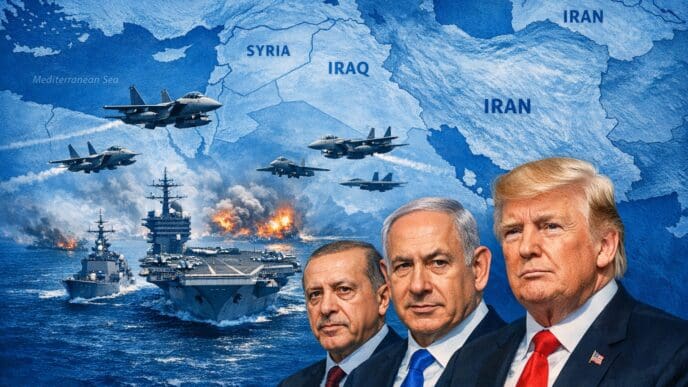
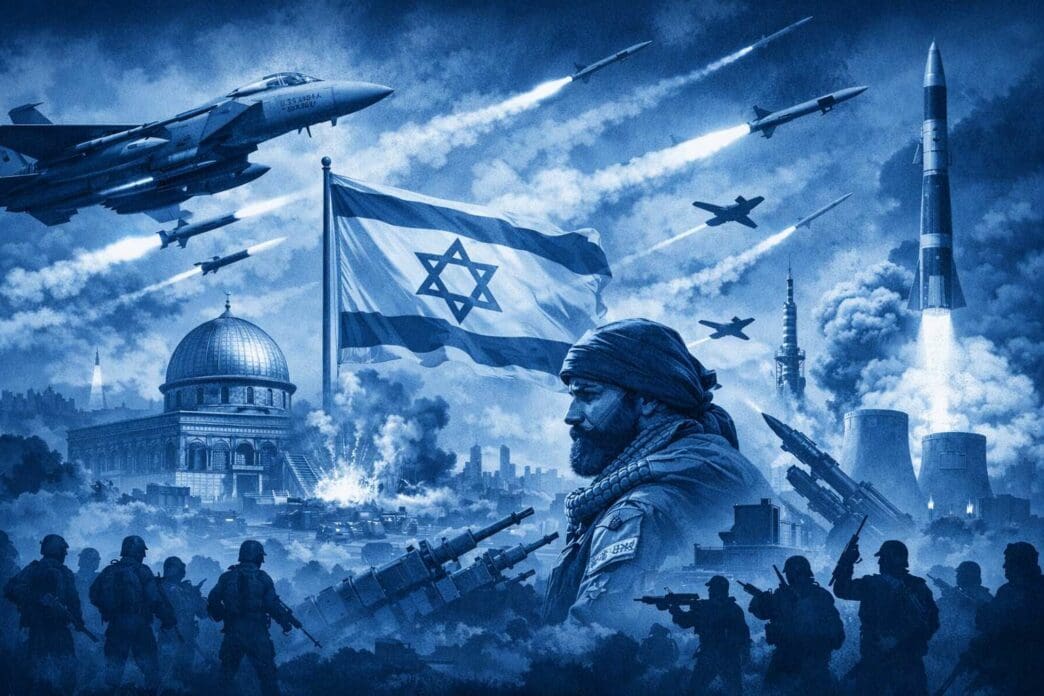
The escalating confrontation between the United States, Israel, and Iran has significantly heightened concerns about the emergence of a broader regional conflict in the Middle East. While recent events have often been interpreted as sudden escalations triggered by immediate geopolitical developments, a deeper examination reveals that the present crisis is embedded within a long historical trajectory of strategic rivalry, ideological antagonism, and competing regional security architectures.
This article argues that the current confrontation reflects a hybrid model of conflict combining traditional interstate rivalry with proxy warfare and strategic deterrence. Rather than representing an abrupt rupture, the crisis of 2025–2026 should be understood as the culmination of decades of geopolitical competition and security dilemmas in the Middle East.
By tracing the historical evolution of relations between the three actors from the Cold War period to the present escalation, the article demonstrates how structural factors, regional balance-of-power dynamics, nuclear deterrence concerns, and proxy military networks have shaped the contemporary conflict environment.
Early Cold War Era (1940s–1970s)
The origins of contemporary tensions between the United States and Iran can be traced to the early Cold War period, when Western strategic interests in the Middle East centred on securing energy resources and containing Soviet influence.
In 1953, the intelligence services of the United States and the United Kingdom supported the overthrow of Iran’s democratically elected Prime Minister Mohammad Mossadegh, restoring the authority of Shah Mohammad Reza Pahlavi (Brew, 2019). This intervention generated enduring mistrust toward Western powers within Iranian political discourse.
During the subsequent decades, the United States developed close strategic partnerships with both Israel and Iran under the Shah (Zabakhidze, 2024). These alliances were largely motivated by shared concerns regarding Soviet expansion and regional instability.
However, the geopolitical landscape changed dramatically following the 1979 Iranian Revolution, which replaced the pro-Western monarchy with an Islamic Republic that adopted a strongly anti-American and anti-Israeli orientation (Koo, 2024).
The seizure of the U.S. embassy in Tehran and the subsequent hostage crisis marked the collapse of diplomatic relations between Washington and Tehran. From that point onward, Iran increasingly positioned itself as a regional challenger to both U.S. influence and Israeli security interests.
Late 20th Century (1980s–2000s)
During the Iran–Iraq War of the 1980s, U.S. policy toward Iran reflected a complex mixture of containment and indirect engagement (Hadian & Hormozi, 2011). Although Washington officially maintained a position of neutrality, it increasingly supported Iraq as a counterweight to Iranian revolutionary influence in the region.
Throughout the following decades, strategic competition between Iran and Israel intensified. Israeli policymakers viewed the potential emergence of a nuclear-capable Iran as a fundamental threat to national security. Consequently, Israeli diplomatic and strategic efforts consistently sought to ensure that Iran’s nuclear programme remained limited or dismantled (Farooq et al., 2025).
At the same time, Iran gradually expanded its regional influence through the development of a network of allied non-state actors. Organisations such as Hezbollah in Lebanon, Hamas in Gaza, and various militia groups in Iraq and Yemen became integral components of Iran’s regional strategy (Khazaeli, 2022).
Through these networks, Iran was able to project influence while avoiding direct interstate confrontation.
This evolving pattern contributed to the emergence of what analysts frequently describe as a “shadow war” between Israel and Iran (Timsit & Westfall, 2024; Katz & Hendel, 2012), consisting of covert operations, cyberattacks, targeted assassinations, and indirect proxy engagements.
Nuclear Negotiations and Rising Tensions (2010s)
Tensions escalated significantly in the early twenty-first century as concerns surrounding Iran’s nuclear programme intensified.
Negotiations between Iran and major world powers culminated in the 2015 Joint Comprehensive Plan of Action (JCPOA) (Irani, 2017), which imposed limitations on Iran’s nuclear activities in exchange for sanctions relief.
The agreement temporarily reduced tensions and introduced mechanisms for international monitoring under the supervision of the International Atomic Energy Agency.
However, the diplomatic framework began to unravel when the United States withdrew from the agreement in 2018 and reimposed economic sanctions on Iran (Kheder & Ismail, 2025).
The reintroduction of sanctions significantly weakened Iran’s economy and strengthened hardline factions within the Iranian political system.
At the same time, Israel and several U.S. policymakers argued that the agreement failed to adequately address Iran’s missile programme and regional military activities (Yom, 2020).
The collapse of the nuclear agreement deepened the security dilemma between the three actors: measures adopted by one side to enhance its security were interpreted by the others as aggressive threats requiring countermeasures.
Proxy Conflicts and Escalation (2023–2025)
By the early 2020s, the strategic competition between Iran and Israel increasingly manifested through proxy conflicts across the Middle East (Katz, 2025).
Iranian-aligned militias carried out attacks against Israeli and American interests in Iraq and Syria, while Israel conducted repeated air strikes targeting Iranian positions and logistical networks in Syria.
The conflict escalated further following the outbreak of war between Israel and Hamas in October 2023.
The crisis rapidly expanded beyond Gaza as Iranian-backed groups launched attacks on Israeli targets and U.S. military installations throughout the region.
In response, the United States conducted air strikes against facilities associated with Iranian proxy forces.
These operations signalled a shift toward expanded confrontation between the United States and Iran, although both sides initially sought to avoid a full-scale interstate war.
The June 2025 War and Beyond
The conflict entered a new phase in 2024 when hostilities escalated beyond proxy engagements.
A strike attributed to Israel in Syria reportedly killed senior Iranian military officials, prompting Iran to launch a large-scale missile and drone attack against Israeli territory.
This represented the first direct Iranian attack on Israel conducted from Iranian soil (Touiserkani, 2025).
Subsequent retaliatory strikes by Israel targeted Iranian military infrastructure and nuclear-related facilities. These exchanges significantly weakened several components of Iran’s regional proxy network while simultaneously intensifying the strategic rivalry between Tehran and Tel Aviv.
The confrontation escalated further in June 2025, when Israel launched extensive strikes on Iranian nuclear facilities following allegations of new nuclear violations reported by the International Atomic Energy Agency (Bagheri Dolatabadi, 2025).
Iran responded with missile attacks against Israeli targets and U.S. military bases in the region.
The United States subsequently conducted air strikes against Iranian nuclear infrastructure, marking an unprecedented moment in which a U.S. administration directly targeted another state’s nuclear programme.
March 2026 and the Current Escalation
In early March 2026, the conflict expanded further as Israeli forces initiated a new series of strikes against strategic locations inside Iran, including facilities associated with Iran’s political and military leadership.
Iran responded with an extensive missile and drone barrage targeting Israeli territory and allied positions across the Gulf region.
The escalation quickly extended beyond the initial belligerents. Several Gulf states reported missile interceptions and infrastructural damage as the conflict spilled into neighbouring territories.
The widening scope of hostilities illustrated how rapidly proxy-based confrontations can transform into regional crises involving multiple actors.
The displacement of hundreds of thousands of civilians and the disruption of critical infrastructure underscored the broader humanitarian and geopolitical consequences of the conflict.
Strategic Objectives of the Main Actors
Despite the apparent unpredictability of recent events, the strategic behaviour of the principal actors reveals significant continuity with earlier policy patterns.
For the United States, Middle Eastern strategy has long focused on preserving regional stability in ways that protect energy routes and maintain the security of allied governments.
Washington has frequently relied on military intervention to enforce these objectives, although such interventions have often generated unintended consequences.
Israel’s strategic priorities are shaped primarily by security concerns.
Israeli leaders consistently view the emergence of a nuclear-capable Iran as an existential threat, leading to sustained efforts to prevent Tehran from developing advanced nuclear capabilities (Youvan, 2024).
Iran, for its part, has pursued a strategy centred on deterrence and regional influence.
Through the development of proxy networks and missile capabilities, Iranian leaders aim to counterbalance the military superiority of both Israel and the United States.
Realism, Security Dilemmas, and Deterrence
Understanding the evolving confrontation between the United States, Israel, and Iran requires an analytical framework capable of explaining persistent conflict despite repeated diplomatic initiatives.
International Relations theory, particularly the realist tradition and deterrence theory, provides useful conceptual tools for interpreting the strategic dynamics that shape this triangular rivalry.
Realist theory emphasises that the international system is fundamentally anarchic (Waltz, 2014), meaning that no overarching authority exists to guarantee the security of states.
In such an environment, states are compelled to prioritise survival and security above all other objectives.
As a result, power accumulation and strategic balancing become central features of international politics.
Scholars associated with structural realism argue that the distribution of capabilities within the international system largely determines state behaviour (Buzan, 1993; Waltz, 2000; Snyder, 2014).
From this perspective, tensions between Iran, Israel, and the United States can be interpreted as the product of competing attempts to maintain favourable regional balances of power.
Within the Middle Eastern context, the United States has historically sought to preserve a regional order aligned with its strategic interests, particularly the protection of energy supply routes and the security of allied governments.
Israel, meanwhile, has pursued policies aimed at preventing the emergence of regional actors capable of challenging its military superiority.
Iran, in contrast, has attempted to expand its strategic autonomy and regional influence to counter what it perceives as an encircling coalition led by Washington and Tel Aviv.
This dynamic closely resembles what political scientists describe as a security dilemma.
The concept suggests that defensive measures taken by one state may be interpreted as offensive threats by others (Montgomery, 2006).
Consequently, actions intended to increase security—such as military modernisation or alliance formation—often generate countermeasures that ultimately reduce overall stability (Walt, 2010).
Deterrence theory further illuminates the strategic logic underlying the behaviour of these actors.
Classical deterrence theory emphasises that states attempt to prevent aggression by convincing adversaries that the costs of attack would outweigh any potential benefits (Mazarr, 2020).
Deterrence relies not only on military capability but also on credible signalling and the perceived willingness to use force if necessary (Klinger, 2019).
Both Israel and Iran have developed strategies consistent with deterrence logic.
Israel has historically relied on a doctrine of military superiority and preemptive action to prevent adversaries from acquiring capabilities that could threaten its existence.
Iran, lacking the conventional military capacity to confront Israel or the United States directly, has instead pursued what analysts describe as asymmetric deterrence (Freedman, 2017).
Through ballistic missile programmes and allied non-state actors, Iran has sought to impose high strategic costs on its adversaries in the event of conflict.
Conclusion
The present confrontation between the United States, Israel, and Iran should not be understood as an isolated geopolitical crisis triggered by recent events.
Rather, it represents the culmination of decades of strategic rivalry, competing security doctrines, and unresolved regional tensions.
Each actor’s recent moves can be interpreted as extensions of longstanding patterns:
-
Iran seeking regional influence
-
Israel safeguarding its security horizon
-
the United States preserving the regional order it helped create
The conflict increasingly reflects a hybrid model of warfare, in which proxy networks, deterrence strategies, and limited direct strikes coexist alongside traditional interstate competition.
Unless mechanisms for sustained diplomatic engagement and regional security cooperation are established, the structural drivers underlying the confrontation are likely to persist.
Although International Relations is classified among the social sciences and therefore relies on theoretical interpretation, the behaviour of states in the international system often follows recurring strategic patterns.
Concepts such as deterrence, balance of power, and the security dilemma illustrate that state behaviour is not purely arbitrary but shaped by structural pressures and the fundamental imperative of survival.
In this sense, the actions of international actors cannot be understood primarily in moral terms, but within the strategic logic that governs the anarchic international system.
Bibliography (Chicago Style)
Azad, T. M., M. W. Haider, and M. Sadiq. “Understanding Gray Zone Warfare from Multiple Perspectives.” World Affairs 186, no. 1 (2023): 81–104.
Bagheri Dolatabadi, A. “The June 2025 Israeli War: Iran’s Assessment and Regional Consequences.” Middle East Policy 32, no. 3 (2025): 16–35.
Brew, Gregory. “The Collapse Narrative: The United States, Mohammed Mossadegh, and the Coup Decision of 1953.” Texas National Security Review 2, no. 4 (2019): 38–59.
Buzan, Barry. “From International System to International Society: Structural Realism and Regime Theory Meet the English School.” International Organization 47, no. 3 (1993): 327–352.
Farooq, U., M. Saqib, and G. Mustafa. “Iran’s Nuclear Ambitions: A Potential Threat to Israel.” Pakistan Social Sciences Review 9, no. 2 (2025): 89–98.
Freedman, G. “Iranian Approach to Deterrence: Theory and Practice.” Comparative Strategy 36, no. 5 (2017): 400–412.
Hadian, N., and S. Hormozi. “Iran’s New Security Environment Imperatives: Counter-Containment or Engagement with the US.” Iranian Review of Foreign Affairs 1, no. 4 (2011): 13–55.
Irani, O. “The Joint Comprehensive Plan of Action and Its Looming Shadow on American-Iranian Relations.” Seton Hall Legislative Journal 42 (2017): 401–430.
Katz, Y. “Dynamics of Power of Political Alliances and Proxy Conflicts in the Middle East.” American Research Journal of Humanities & Social Science 8, no. 5 (2025): 68–77.
Katz, Yaakov, and Yonah Hendel. Israel vs. Iran: The Shadow War. Washington, DC: Potomac Books, 2012.
Khazaeli, S. “Iran’s Strategy in the Middle East and Mediterranean Region: The Hezbollah Model.” In Hybrid Threat Activity in the MENA Region: State and Non-State Actors Seeking Status and Expanding Influence, 70–84. Cham: Springer, 2022.
Kheder, R. S., and S. S. Ismail. “The Impact of US Sanctions on Iran’s Regional Influence (2017–2021).” Twejer Journal 8, no. 2 (2025): 441–477.
Klinger, J. M. “The Science of Strategy: Deterrence and Coercion Theory.” In Social Science and National Security Policy: Deterrence, Coercion, and Modernization Theories, 59–112. Cham: Springer International Publishing, 2019.
Koo, G. Y. “Wavering Theocratic Ideology and the Politicization of Shia Identity: Iran’s Ideological Rifts amid Geopolitical Maneuvers.” Asian Journal of Political Science 32, no. 2 (2024): 259–277.
Mazarr, Michael J. “Understanding Deterrence.” In NL ARMS Netherlands Annual Review of Military Studies 2020: Deterrence in the 21st Century—Insights from Theory and Practice, 13–28. The Hague: T.M.C. Asser Press, 2020.
Montgomery, Evan B. “Breaking Out of the Security Dilemma: Realism, Reassurance, and the Problem of Uncertainty.” International Security 31, no. 2 (2006): 151–185.
Snyder, Glenn H. “Mearsheimer’s World: Offensive Realism and the Struggle for Security.” In The Realism Reader, edited by Colin Elman and Michael Jensen, 188–196. London: Routledge, 2014.
Timsit, Annabelle, and Sammy Westfall. “Iran and Israel’s Shadow War Has Lasted Years: Key Moments before the Attack.” The Washington Post, April 2024.
Touiserkani, M. “Finishing the Cycle: A Predictive Assessment of Renewed US–Israeli Operations against Iran (October 2025–March 2026).” SSRN Working Paper, 2025.
Walt, Stephen M. “Realism and Security.” In Oxford Research Encyclopedia of International Studies. Oxford: Oxford University Press, 2010.
Waltz, Kenneth N. “Structural Realism after the Cold War.” International Security 25, no. 1 (2000): 5–41.
Waltz, Kenneth N. “Realist Thought and Neorealist Theory.” In The Realism Reader, edited by Colin Elman and Michael Jensen, 124–128. London: Routledge, 2014.
Yom, Sean. “US Foreign Policy in the Middle East: The Logic of Hegemonic Retreat.” Global Policy 11, no. 1 (2020): 75–83.
Youvan, D. C. “Iran’s Stance on Nuclear Weapons: A Synthesis of Religious Principles, Geopolitical Strategy, and National Security Concerns.” ResearchGate Working Paper, 2024.
Zabakhidze, I. “Important Aspects of the Strategic Partnership between Israel and the USA.” Journal of Historical Studies 2, no. 4 (2024).